
Learn foreign languages while watching your favorite YouTube videos!
The Language learning app is a handy set of tools that will help you improve your language skills by accessing subtitles, a built-in dictionary, and saving words and phrases you want to learn to revise.
Learning foreign languages will be an interesting and exciting experience for you!
Born: 1890
Died: 1977
Gender: Male
Nationality: American
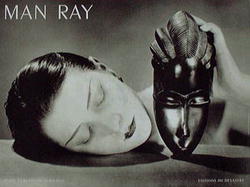
“It has never been my object to record my dreams, just the determination to realise them.” Man Ray.
Man Ray was born Emmanuel Radinski in Philadelphia the son of a Russian-Jewish immigrant tailor. He became known as Man Ray from the age of 15 as other youngsters teased him about his foreign sounding name. In 1897 his family moved to New York where he was to work as a designer while attending evening classes in art. Man Ray was inspired by the Armory Show in 1913, after which he began painting in a Cubist style. Two years later he met Marcel Duchamp and along with Picabia, the three artists were to become the main exponents of Dadaism in New York. In 1920 with Duchamp and Katherine Dreier he formed the Société Anonyme, an association for the promotion of contemporary art in America.
In 1921 he moved to Paris where he became part of the Surrealist movement. While in Paris he gained a high reputation as a fashion and portrait photographer but returned to painting full-time in the Thirties. In 1940, fleeing the German occupation of Paris, Man Ray settled in Hollywood, where he was to spend the next decade returning to Paris in 1951.
While his early endeavours included painting aerographs and making the first packaged objects (a field later made famous by Christo), Man Ray is best known for his photography. He developed the technique of ‘solarization’ and pioneered what became known as ‘Rayographs’, that is photographs produced by placing objects directly onto sensitized paper and exposing them to light without the use of a camera. Man Ray was also involved in filmmaking, producing a number of experimental and abstract films.
Man Ray worked in a variety of media and achieved substantial success in each. His most famous object is generally regarded as ‘The Gift’ (1921), a flatiron with a row of nails sticking out of it and his most renowned painting is ‘Observatory Time’ (1934) depicting an enormous pair of floating lips.