
Learn foreign languages while watching your favorite YouTube videos!
The Language learning app is a handy set of tools that will help you improve your language skills by accessing subtitles, a built-in dictionary, and saving words and phrases you want to learn to revise.
Learning foreign languages will be an interesting and exciting experience for you!
Born: 1923
Gender: Male
Nationality: American
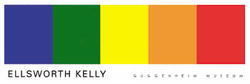
Ellsworth Kelly was born in Newburgh, New York. In 1941 he graduated from high school and with financial aid from his parents, moves to Brooklyn to study technical drawing at the Pratt Institute. In 1943, however, he was inducted into the US Army yet managed to continue his artistic endeavors through making silkscreen posters about camouflage and, in 1944 on a tour of duty in Europe, making watercolours and sketches. In 1946 he attended the School of the Museum of Fine Arts in Boston and then taught at the Norfolk House Centre in the Roxbury section of Boston. With a stipend from the American Army Kelly travelled to Paris in 1948 to study at the Ecole des Beaux-Arts.
He remained in Paris for many years building up a community of like-minded artists and enjoying the respect given to cultural pursuits in the city. In May 1949 he completed his first abstract painting, then in June with the visit of his friend Ralph Coburn from Boston, he was introduced to the Surrealist technique of unpremeditated drawing’. In 1951 he had his first one-man exhibition at the Galerie Arnaud in Paris featuring many of his collages, reliefs and drawings. It was at this time that he met such influential figures as Eduardo Paolozzi and Jean Arp. After his first one-man show in the United States in 1956 he met Richard Kelly, the lighting designer and consequently received commissions to execute lobby and restaurant sculptures in the new Transportation Building for Penn Centre in Philadelphia. By now his reputation was confirmed. By 1959 he had enjoyed considerable success in a number of exhibitions. He produced his first floor pieces for a show at the Betty Parsons Gallery in this year including ‘Gate’ and ‘Pony’.
In his painting and sculpture, Kelly liked to explore the complexities that a simple design could offer up. He favoured smooth flat surfaces with hardly any surface texture. He was greatly inspired by Picasso’s outline painting, ‘The Kitchen’ and this informed his abstractions and reliefs for much of his career. Kelly frequently felt frustrated with the way his work was received. He felt that he was ahead of his time, and that with the acclaim being heaped upon the American Expressionists he was not getting his due. His many works in the Hard Edge style, however, have been influential and his work is regularly featured in exhibitions.