
Learn foreign languages while watching your favorite YouTube videos!
The Language learning app is a handy set of tools that will help you improve your language skills by accessing subtitles, a built-in dictionary, and saving words and phrases you want to learn to revise.
Learning foreign languages will be an interesting and exciting experience for you!
Born: 1898
Died: 1976
Gender: Male
Nationality: American
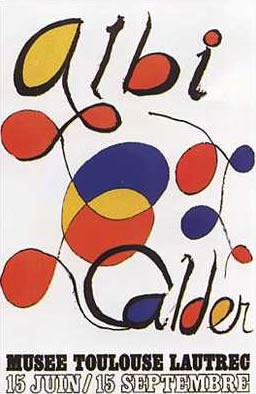
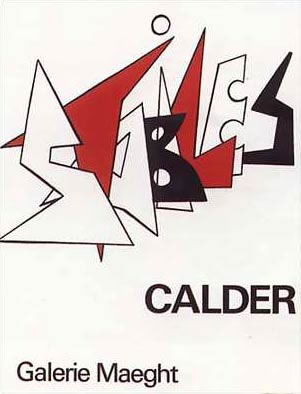
“Calder changed the nature of sculpture. He redefined what sculpture was, could possibly be and now is.” Arne Glimcher, Pace Wildenstein Gallery
Alexander Calder was born into art. His father and grandfather were famous sculptors who worked in the traditional beaux-arts style. His mother painted and his Scottish fore fathers were stone masons. Art was part of everyday life for Calder, who had his own studio/workshop from a young age. He was fascinated with mechanical devices throughout his childhood. There were no restrictions or limitations placed upon him by his parents and he was encouraged to be inventive and innovative.
In 1915 he enrolled to study mechanical engineering at the Stevens Institute of Technology, New Jersey. Calder showed himself to be a brilliant student. He became fascinated with mathematics, physics, kinetics, engineering, and the nature of materials. Later when he worked as an engineer on a ship, one morning off the coast of Guatemala, he recalled an event that was a defining moment in his artistic life, “I saw the beginning of a fiery red sunrise on one side. I saw the moon looking like a silver dollar on the other. It left me with a lasting sensation of the solar system.”
1923 found Calder in New York. He found work by painting, drawing and illustrating for newspapers and magazines. He became obsessed with the circus, which he visited frequently. This obsession would last for the rest of his life. Later he would construct a miniature circus in Paris. He would put it on display for guests and charge them to help pay his rent. He immersed himself in the Paris art scene. He was never without a pair of pliers and wire. Drawing with metal is what he called it. He adored the American dancer Josephine Baker and became fascinated with the kineticism of her body. This inspired him to do a whole series of figurative wire sculptures of her. These suspended wire constructions took Calder one step closer to the creation of the wind-driven mobiles of the 1930s.
Even before he began composing abstract elements to form mobiles, Calder had taken into account the delicate equilibrium the sculpture would need to hang properly and move freely. It was Calder’s first essay in kineticism, an interest that occupied him for decades thereafter. In 1927, Calder held his first solo exhibition in New York, which was a modest success. 1930 was another defining year in Calder’s artistic life. He visited Piet Mondrian in Paris. In the studio, the American had seen a white wall with cardboard rectangles of varying colors tacked upon it. This wall actually impressed him more than Mondrian’s paintings, and Calder proposed that the rectangles could be made to oscillate in different directions, and at different amplitudes. Mondrian said, “No! My paintings are already very fast. ” This meeting with Mondrian left a lasting impression upon Calder, The visit proved to be the “shock that started things,” as he said later.
Inspired by Mondrian, Calder commenced a series of abstract paintings, but quickly returned to abstract sculpture. Calder said, “The underlying form in my work, is the system of the universe. A rather large model to work with.” Within a year of the visit to Mondrian, Calder’s concept of abstract forms in motion was fully realized, with the creation of the mobile, but even his initial constructions manifest a radical change in his work. The witty wire caricatures of animals and acrobats were abandoned for spheres, arcs, and constellations accompanied by analytical descriptions that confirmed the scientific orientation of his vision. Calder combined his interest in cosmic imagery with the technical mastery of physical principles that resulted from his training as a mechanical engineer. At the time, he wrote: “Why not plastic forms in motion? Not a simple transitory or rotary motion but several motions of different types, speeds, and amplitudes composing to make a resultant whole, just as one can compose colors, or forms, so one can compose motions.” He became intrigued by serendipity and introduced chance into his sculptures through random motion.
Calder asked Duchamp, “What should I call these things. ” Duchamp replied, “Mobiles, ” this was a French pun, which meant motive and motion. Jean Paul Sartre described the mobile as, ” The mobile is a little private celebration, an object defined by its movement and having no other existence. A mobile does not suggest anything. It captures genuine living movements. Mobiles have no meaning, they are, that is all. ” In Calder’s early years as an artist, it seems he was systematic in his approach to “composing motions.” Later, having perfected his technical methods, he became ever more inventive with his moving sculpture. The most engaging aspect of Calder’s sculpture was its interaction with space. Mobiles participated in lively dialogues with their environs, reacting to air currents and human touch. The stabiles enfolded and incorporated spatial volume. As Calder put it: “I paint with shapes.”
During this time, Calder fell under the spell of Leger, Duchamp, Arp, Klee, and Picasso. His greatest influence however was Miro who was a direct inspiration for many of the shapes that he used. Miro’s biomorphic motif survived in Calder’s art until the end of his life. Calder’s sculpture was the perfect marriage of abstraction and movement. Einstein once visited a Calder show and stood transfixed for forty minutes in front of a work called Universe. By 1937, Calder was thinking of making monumental public sculptures of his works. He refused to call his work art, “I call them objects, that way no one can come along and say, these aren’t sculptures, it washes my hands of having to define them.” In fact, he rarely talked about his art. He worked in any medium; plaster, bronze, rugs, tapestries, commercial wallpaper, stage sets, book illustration, posters, prints, and jewelry. He would begin every day with a gouache painting.
By the 1940’s, Calder dream of monumental sculpture was realized. Jean Arp suggested the term stabiles to describe the abstract monuments of bolted steel, based on ship building techniques. The stabiles have an implied, lyrical movement. They suggest primordial animal forms. Calder began to change the very concept of public sculpture. His stabiles gave poorly designed stark public spaces a humane touch. Calder began to design sculptures with site specificity in mind. As Calder’s fame increased, he painted jet airliners and racecars, but always with total honesty and integrity to his art. In the 1960’s, he became a voice for the anti–Vietnam War campaign. Throughout his long prolific career, Calder produced more than16, 000 works, at an average of one work a day for fifty years. The quality of his work was consistent, always imbued with a joy, pleasure and a child like quality. His work never became banal or sentimental. Calder died in 1976, a few weeks after a retrospective at the Whitney Museum. Calder is a giant of modern art. He used the Universe as his model and in doing so, created his own unique universe.