
Learn foreign languages while watching your favorite YouTube videos!
The Language learning app is a handy set of tools that will help you improve your language skills by accessing subtitles, a built-in dictionary, and saving words and phrases you want to learn to revise.
Learning foreign languages will be an interesting and exciting experience for you!
Born: 1825
Died: 1905
Gender: Male
Nationality: French
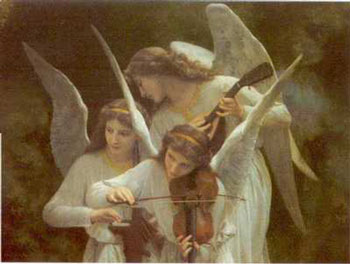
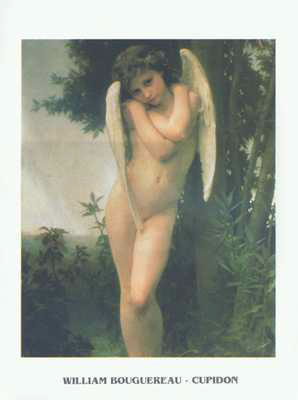
“In painting, I’m an idealist. I see only the beautiful in art and, for me, art is the beautiful. Why reproduce what is ugly in nature? I don’t see why it should be necessary.” William Bouguereau.
William Bouguereau was born in the Rue du Duc in La Rochelle. He showed talent in drawing from an early age and studied under Louis Sage who himself had trained under Ingres. In 1846, after winning first prize in a figure painting competition in Bordeaux, Bouguereau travelled to Paris and entered the atelier of François Picot. He greatly respected Picot calling himself ‘élève de Picot’ for his entire career. His early work mainly consisted of the production of académies (cast drawings and pencil life studies) and to studies of anatomy and perspective.
In 1848 Bouguereau joined the National Guard to fight on the side of the monarchy. His painting, ‘Equality’ (1848) refers specifically to the revolution, yet no other painting deals with troubled times as in this work, Bouguereau preferring more settled times in which to work. In 1850 with the painting ‘Zenobia Found by Shepherds on the Shore of the Araxes’ (1850) Bouguereau won a three year fellowship at the Villa Medici.
He travelled widely around Italy painting many landscapes which were to inform many of his later genre paintings. After completing his ‘Triumph of the Martyr: The Body of Saint Cecilia Brought into the Catacombs’ (1854), Bouguereau returned to Bordeaux. He soon received a number of commissions, including ‘Napoleon III visiting the Flood Victims of Tarascon’ (1856). Three years later after getting married and becoming a father, Bouguereau began the production of genre paintings to be marketed firstly by the Durand-Ruel Gallery and later on by Goupil. Bouguereau’s paintings at this point became more naturalistic, though retaining their tone of idealism. Bouguereau took part in the Franco-Prussian War in 1870 and, upon returning to his artistic pursuits was elected to the Académie des Beaux Arts de l’Institute de France in 1876. In 1888 he was named Professor at the Ecole des Beaux-Arts and became one of the most influential teachers at the school.
Bouguereau was an admirer of traditional art and had no time for anything resembling innovation or the avant-garde. His sense of idealism was his guiding principle, regarding the ugly as worthless for representation. His views angered many, for example, J.K. Huysmans who called Bouguereau ‘a master in the hierarchy of mediocrity’. He has left a large body of work and he is undoubtedly a key figure in 19th century French art.