Leonardo Da Vinci - The Renaissance Man Documentary
The People Profiles · 1:01:00
Italian Renaissance polymath (1452−1519) · 1452–1519
Tap or drag the sky to stir it · open any painting to paint the sky with its colours.
Leonardo di ser Piero da Vinci (15 April 1452 – 2 May 1519) was an Italian polymath of the High Renaissance who was active as a painter, draughtsman, engineer, scientist, theorist, sculptor, and architect. While his fame initially rested on his achievements as a painter, he has also become known for his notebooks, in which he made drawings and notes on a variety of subjects, including anatomy, astronomy, botany, cartography, painting, and palaeontology. Leonardo is widely regarded as a genius who epitomised the Renaissance humanist ideal, and his collective works contributed to the development of European art to an extent rivalled only by that of his younger contemporary Michelangelo.From Wikipedia, CC BY-SA 4.0
Leonardo da Vinci was born in Anchiano near Vinci. His talents blossomed early and he entered the Florentine workshop of Andrea del Verrochio in 1469. Three years later he joined the painters’ guild of St. Luke in Florence after an apprenticeship with Verrochio. Numerous provisional drawings exist from this period and it was already clear that Leonardoshowed enormous skill. In 1482 he moved to Milan where he stayed until 1499(leaving because of the French invasion).
Soon after arriving in Milan he received a commission for the ‘Madonna of the Rocks’ from the Confraternity of the Immaculate Conception. He worked mainly at the court of Duke Ludovico Sforza where he undertook two major projects, the first of which was a large equestrian statue to Sforza’s father and the second, ‘The Last Supper’ (c.1495-1497). Besides these, Leonardo worked on a number of portraits including the ‘Lady with an Ermine’ (c.1483-1486) and an altarpiece of the ‘Madonna of the Rocks’ (1483-1485). Then in 1500 he returned to Florence. He began working as a military engineer for Cesare Borgia. In 1506 he then returned to Milan and a year later Louis XII of France appointed Leonardo as his painter and engineer. By 1513 he was in Rome again where Pope Leo X offered him an apartment in the Bleeder of the Vatican. However, it was between 1500 and 1506 when Leonardo was probably most active, producing ‘Mona Lisa’ and the wall painting ‘Battle of Anghiari’ amongst others. In 1516 da Vinci moved to France on the invitation of Francis I and three years later died at Cloux, near Amboise.
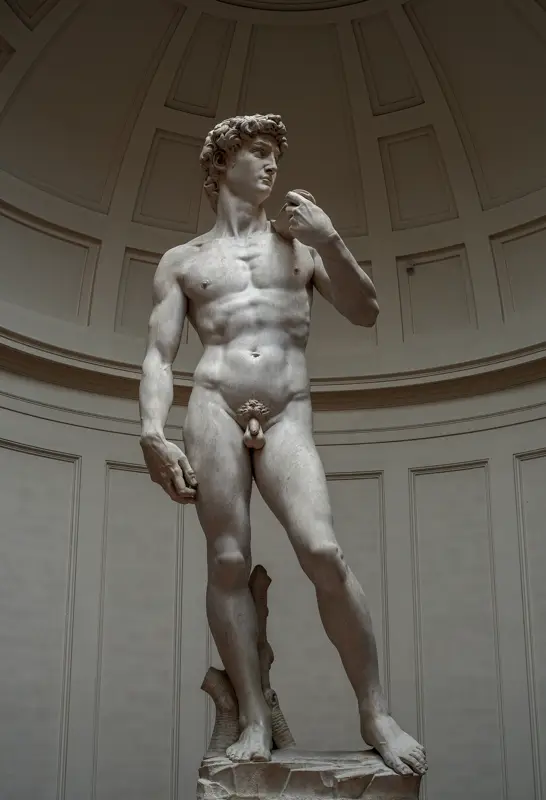
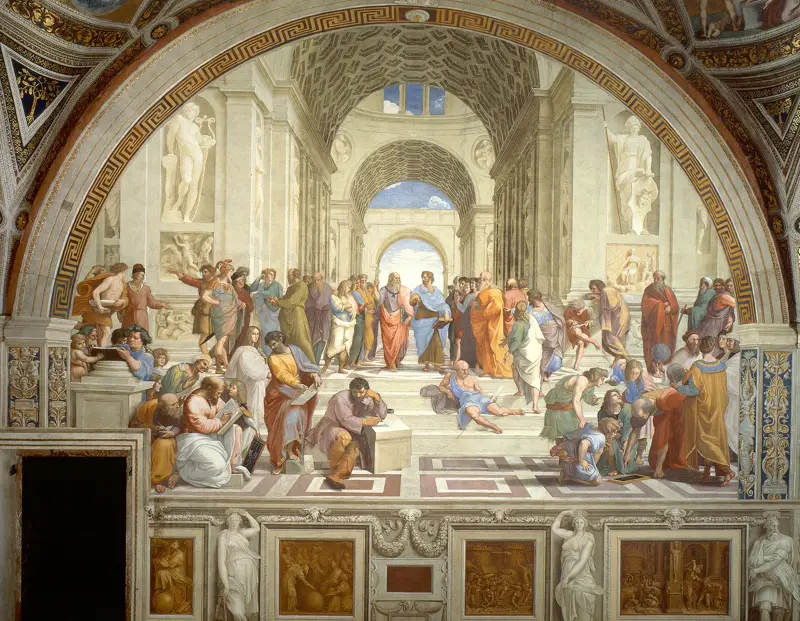
Leonardo da Vinci has left an astonishing legacy, not only in his painting and theses on painting but in the fields of design and engineering also. Works such as ‘Mona Lisa’ and ‘St John the Baptist’ show his skill most exquisitely. His work influenced the High Renaissance movement and particularly the two artists Michelangelo and Raphael. Although he did not leave a large body of work, his remarkable intellect and innovative ideas as well as the extraordinary technique he showed in his paintings and sculptures ensured his enduring reputation.
12 works with free-to-use images. Select a painting to view it large.
Tap a stop on the timeline to fly there. Switch on museums to see where the works hang today.
Born here in 1452.
Lived here (1469–1482); Worked here.
Lived here (1482–1500); Worked here.
Lived here; Worked here.
Lived here; Worked here.
Worked here.
Worked here.
Died here in 1519.
Tap a card to flip it.
10 questions drawn from this page. Questions and answers are shuffled every time.
Hand-picked YouTube videos. They load only when you press play.
The People Profiles · 1:01:00
BlackBox Studios · 12:42
Mind Palace · 1:55:05
Roberts Architecture · 11:25
Collections that hold the works on this page. Displays change, so check with the museum before you travel.
Leonardo da Vinci was born on 15 April 1452 in Anchiano, Italy and died on 2 May 1519 in Clos Lucé, France, aged 67.
Leonardo da Vinci was Italian.
Leonardo da Vinci is associated with High Renaissance, Renaissance.
Well-known works by Leonardo da Vinci include Mona Lisa, The Last Supper, Vitruvian Man, Lady with an Ermine and Salvator Mundi.
Museums holding the works on this page include Louvre (Paris); Uffizi Gallery (Florence); Santa Maria delle Grazie (Milan); Gallerie dell'Accademia (Venice); Munich Central Collecting Point (Munich). Check with each museum that a work is on display before you visit.